Kenya is famous for what roams its plains. But some of its most breathtaking wildlife moves in silence, weightless and unhurried, beneath the warm waters of the Indian Ocean. At Malindi Marine National Park, the safari continue...
Kenya is famous for what roams its plains. But some of its most breathtaking wildlife moves in silence, weightless and unhurried, beneath the warm waters of the Indian Ocean. At Malindi Marine National Park, the safari continues; just below the surface. The town that gives this marine sanctuary its name is as remarkable as the waters that surround it. Malindi is one of Kenya's oldest coastal settlements, perched on the shores of Malindi Bay where the Galana River meets the Indian Ocean, 120 kilometres northeast of Mombasa. A Swahili trading port since the 14th century, it once rivalled Mombasa for dominance along the East African coast; welcoming Arab merchants, and later the Chinese explorer Zheng He in 1414, whose fleet received a giraffe as a royal gift to carry back to China. When the Portuguese explorer Vasco da Gama arrived in 1498, he found a town already rich in history, culture, and commerce, erecting a coral pillar that still stands today as one of the oldest European monuments in sub-Saharan Africa.
The Malindi and Watamu Marine National Parks form a continuous protected coastal area, together designated as a UNESCO Biosphere Reserve in 1979 under the Man and Biosphere programme, recognising the exceptional diversity of their marine and coastal ecosystems. The park and its surrounding reserve encompass coral reefs, seagrass beds, mangroves, lagoons, and tidal mudflats stretching across 213 square kilometres of Indian Ocean coastline, making it one of the most protected marine environments in East Africa.
Beneath the surface, the park is extraordinary. Vibrant coral formations; from staghorn and brain coral to organ pipe varieties, shelter a remarkable diversity of tropical fish, while green, hawksbill, and loggerhead sea turtles nest and feed within these protected waters. Dolphins are resident year-round, and whale sharks move through the deeper blue during seasonal visits, drawing divers and snorkellers from across the world to what is widely regarded as one of Africa's finest underwater destinations.
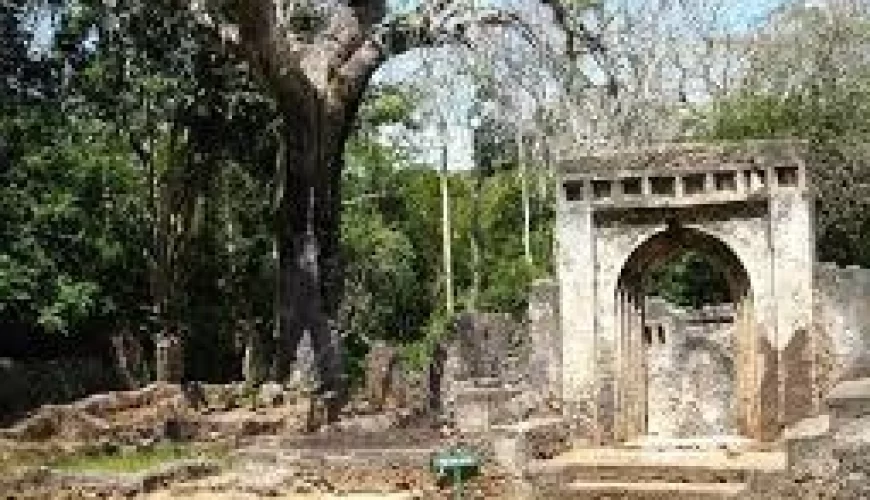
On land, Malindi's layered history reveals itself in the monuments and architecture that line its streets and shore. The Vasco da Gama Pillar, a bell-shaped monument erected in 1498 to guide Portuguese vessels on the sea route to India, still stands at the ocean's edge, one of the oldest European monuments on the East African coast. The Juma Mosque, traditional Swahili buildings, and the nearby Gede Ruins further speak to a coastline shaped by centuries of Arab, Persian, Chinese, and European influence.
Best Time To Visit
The best time to visit Malindi Marine National Park is during the two dry seasons: January to March; and June to September, when calm seas, excellent water visibility, and settled weather create ideal conditions for snorkelling and diving. These months offer the clearest views of the coral gardens and the greatest chance of encounters with sea turtles, dolphins, and whale sharks.
The long rains fall between April and June, and the short rains between October and November, bringing rougher seas and reduced visibility in the water. Sea turtle nesting peaks between June and September, while whale shark sightings are most frequent between October and March, meaning that for the dedicated wildlife enthusiast, every season holds something worth coming for.
Activities
Snorkelling & scuba diving; glass-bottom boat rides; swimming with sea turtles & dolphins; birdwatching along the shore; kayaking & sailing through calm lagoons; windsurfing/ kite surfing; jet skiing; enjoy beach & reef walks; sunbathing; picnics; barbecue excursion to Sardinia Island; visit the iconic Vasco da Gama Pillar.